
Common Winter Roofing Issues
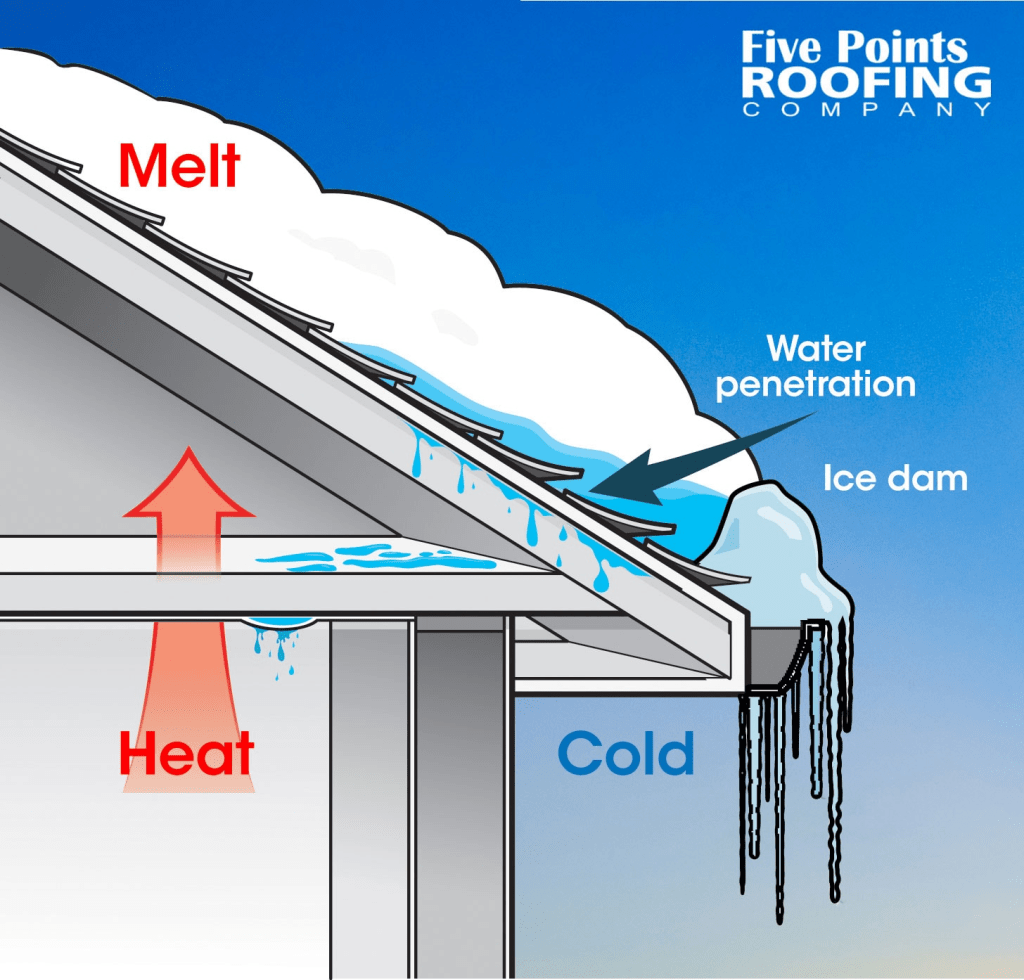
- Ice Dams: These occur when heat from your attic causes snow on the roof to melt, and the water then refreezes at the colder roof edges (eaves), creating a ridge of ice. This ice ridge prevents further melting water from draining, forcing it to back up under your shingles and potentially leaking into your home, causing damage to insulation, walls, and ceilings.
- Snow Load: Heavy or wet snow accumulation puts significant stress on your roof’s structure, which can lead to sagging, cracking, or, in extreme cases, roof collapse.
- Roof Leaks: Freezing and thawing cycles can exacerbate existing vulnerabilities, like cracked or damaged flashing (the metal strips around chimneys, vents, and skylights) or worn shingles, allowing water from snowmelt to seep into the home.
- Condensation and Moisture: Warm, moist air escaping from your home into a cold attic can condense on the underside of the roof deck. Over time, this moisture can lead to mold growth and wood rot, compromising the roof structure and insulation.
- Frozen/Clogged Gutters: Gutters filled with debris, snow, or ice prevent proper drainage. The backed-up water can contribute to ice dam formation or cause water to overflow and damage the fascia and siding.
🛑 Signs of Damage
Be vigilant for these signs that indicate your roof may be experiencing winter damage:
- Icicles forming along the edge of your roof (often an indicator of ice dams).
- Water stains on your interior ceilings or walls.
- Sagging areas of your roof.
- Missing, cracked, or warped shingles after a storm.
- Unusual sounds like creaking or popping from the attic or roof structure.
✅ Prevention and Maintenance Tips
To help your roof survive the winter:
- Clean Gutters: Clear all leaves and debris from your gutters and downspouts before the first freeze to ensure proper drainage.
- Improve Attic Insulation and Ventilation: This is the most effective way to prevent ice dams. Proper insulation minimizes heat loss from the house to the attic, and good ventilation keeps the attic air cold, preventing rooftop snow from melting prematurely. Experts often recommend an insulation value of R-38 or higher in northern climates.
- Remove Excess Snow: Safely use a roof rake to clear snow from the edges of your roof (about 3-4 feet from the eaves) after heavy snowfall.
- Inspect and Repair: Before winter, have a professional inspect and repair any existing issues like cracked flashing or loose shingles.
This video provides an explanation of What To Do If You Have An Ice Dam and how to prevent them with maintenance steps.
Posted In: 11. November
Tagged: blog, marketing, real estate, realtor, roof, social media, winter roofing issues
Tagged: blog, marketing, real estate, realtor, roof, social media, winter roofing issues
 Realty Ideas Per Day
You must be logged in to post a comment.