
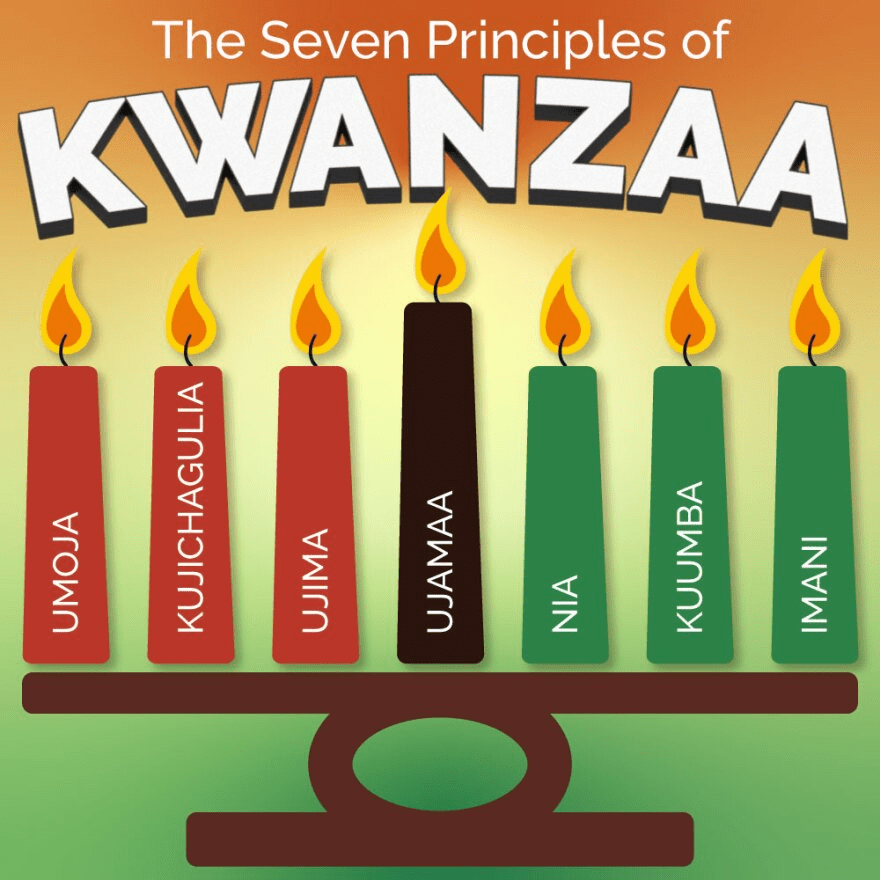
Beginning on December 26th and lasting for seven days, Kwanzaa is a cultural holiday dedicated to celebrating African heritage, unity, and community. Created in 1966 by Dr. Maulana Karenga, the observance is not a religious holiday but a cultural one, designed to reconnect people of African descent with their African roots and community traditions. The name Kwanzaa comes from the Swahili phrase matunda ya kwanza, meaning “first fruits,” referring to the harvest festivals common across Africa. Central to the celebration are the seven fundamental principles, or Nguzo Saba, which serve as guiding tenets for building and strengthening community: Unity (Umoja), Self-Determination (Kujichagulia), Collective Work and Responsibility (Ujima), Cooperative Economics (Ujamaa), Purpose (Nia), Creativity (Kuumba), and Faith (Imani).
Each of the seven nights is dedicated to one of these principles, highlighted by the lighting of the Kinara (a seven-branched candelabrum). The Kinara holds one black, three red, and three green candles, each representing the colors of the Pan-African flag. Alongside the Kinara, other symbols are displayed, including the Mkeka (mat), Mazao (crops), and Vibunzi (ears of corn). The culmination of Kwanzaa is the Karumu (feast) on the sixth day and the exchange of meaningful, often handmade, gifts (Zawadi) on the seventh day. Kwanzaa is a joyful time for families to reflect on the past year, celebrate their heritage, and commit to the collective well-being of their community. Habari Gani! (What’s the News?)
 Realty Ideas Per Day
You must be logged in to post a comment.